The path to becoming a self taught senior engineer isn't about collecting certifications or memorizing LeetCode patterns. It is about the compounding value of shipping real products and understanding the systems underneath the syntax. I learned the hard way that the industry doesn't care how you started; it cares what you can finish.
In my studio, I don't look for credentials. I look for an accumulated operating system. Whether you are coming from music, logistics, or real estate, those domains have grammars and feedback loops that translate directly to software. If you can manage a supply chain or produce a record, you can architect a system.
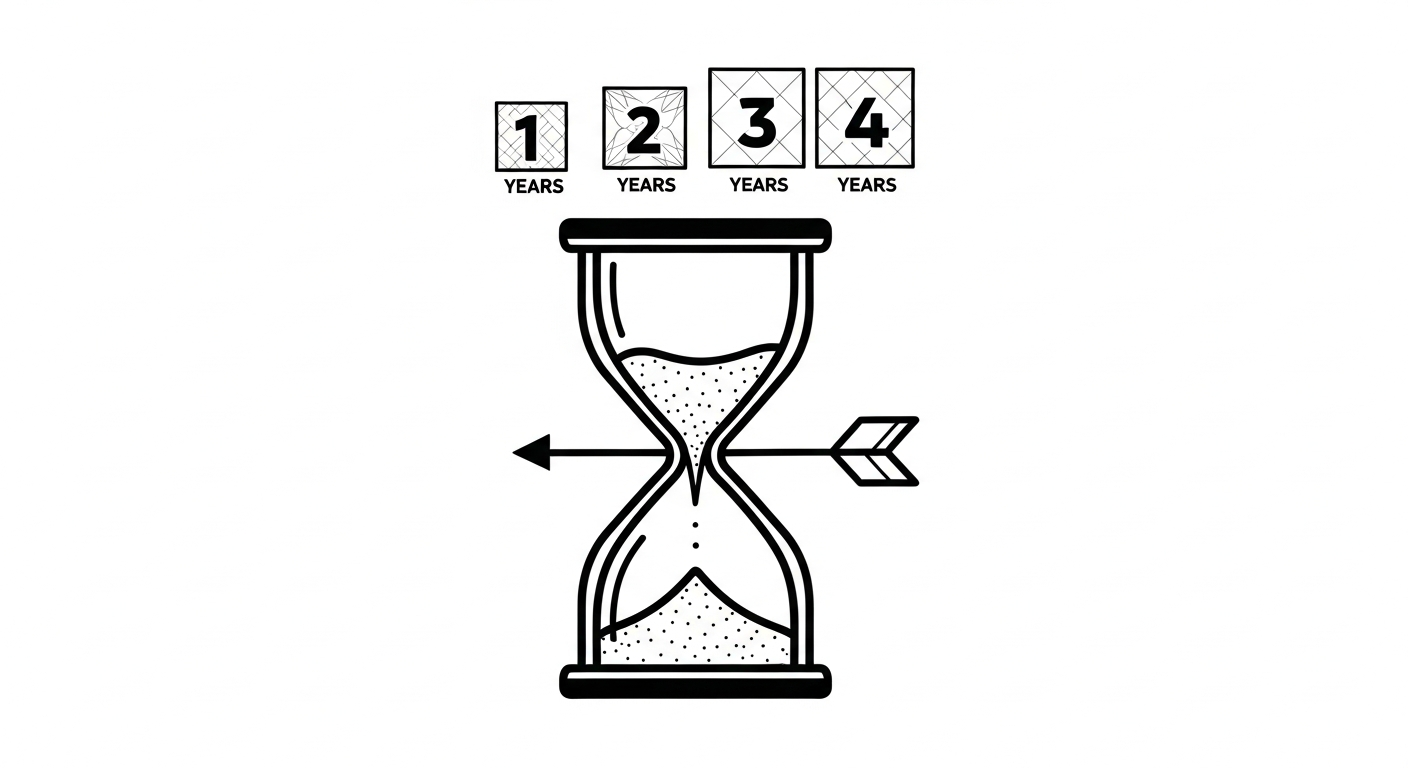
Here is the four-year arc of how that transition actually happens.
The First Two Years: Learning the Syntax
Most people get stuck here because they treat code as the destination. It isn't. Code is a dialect. In the first two years, your goal is to move past the 'how' so you can focus on the 'what.'
You spend this time building artifacts. Not tutorials, not clones—actual tools that solve a problem. During this phase, you are essentially a translator. You are taking a human requirement and turning it into a machine instruction.
What separates a junior from a self taught senior engineer is pattern recognition. You start to notice that a state management issue in a frontend framework looks a lot like a logistics bottleneck in a warehouse. You stop fighting the language and start using it as an instrument.
Year Three: Architecting the System
By year three, you should be bored with syntax. If you are still arguing about semicolons or folder structures, you are stalling. This is the year you move from being a builder of features to an architect of systems.
You start asking about the money layer. How does this code impact the burn rate? How does this database schema affect the long-term maintenance cost?
I’ve run everything from a music business to an Army logistics operation. The lesson that carries over is that every system has a cost. A senior engineer understands that the best code is often the code you don't write. You begin to prioritize durability over cleverness. You build small, well-run, and durable systems rather than big, fast, and brittle ones.
Year Four: Agentic Engineering and the Senior Shift
In 2026, the definition of a senior engineer has shifted. You are no longer just a manual laborer of logic. You are an operator running a multi-product studio with AI as the team.
This is where agentic engineering comes in. Instead of writing every line of a migration, you architect the agent system that handles the research, the execution, and the monitoring. You are working in public, showing the artifacts of what you’ve built, and letting the output do the talking.
If you want to be a self taught senior engineer, you stop looking at code as the product. The product is the solved problem. The code is just the infrastructure. At this stage, you should be able to ship a backend in the morning and a melody in the evening because you recognize they are the same skill: system design.
Why Your Non-Technical Past is Your Edge
I don't apologize for my path, and neither should you. My time in the Army National Guard taught me more about operational feedback loops than any bootcamp ever could. My time in the music business taught me about the grammar of composition.
When you approach software as an integrator, you bring those external patterns with you.
- Logistics: Teaches you about state, flow, and bottlenecks.
- Music: Teaches you about harmony, syntax, and timing.
- Real Estate: Teaches you about leverage and the money layer.
These aren't pivots. They are layers of the same operating system. The transition to a self taught senior engineer role happens when the business trusts your judgment more than your typing speed.
Shipping Today
The work credentials you. If you want to move into senior-level work, stop asking for permission and start shipping. Build a system, document the failures, and show the artifact.
I’m happy to talk about how we’ve structured our studio to leverage these patterns. The goal isn't to be the loudest person in the room; it's to be the one who understands the system well enough to make it move.
If you are ready to stop being a developer and start being an architect, the first step is to audit your own operating system. What patterns are you bringing from your past lives? How are you using AI as an operating layer rather than just autocomplete?
Work through this in a 1:1 strategy session through Total Ventures — totalventures.io/booking
Studio Notes
How I’m building the studio.
The operator’s log — systems, decisions, and what’s working.
Written by
Founder, Total Ventures
Solo-founder building a multi-brand product studio with AI agents. Writing about building, operating, and shipping.

