On this page
- The Four-Year Arc: From Syntax to Systems
- Year One: Shipping the First Artifacts
- Year Two: Pattern Recognition and the Monorepo
- Year Three: Operations and Infrastructure
- Year Four: Architecting the Operating Layer
- Why the "Self-Taught" Label is a Distraction
- Agentic Engineering: The Senior Multiplier
- Profit Before Revenue, Craft Before Scale
- How to Close the Gap
The path to becoming a self taught senior engineer isn't about collecting certifications or memorizing LeetCode patterns. It is about building an operating system for your work. I learned the hard way that the industry doesn't care how you learned; it cares what you can ship today.
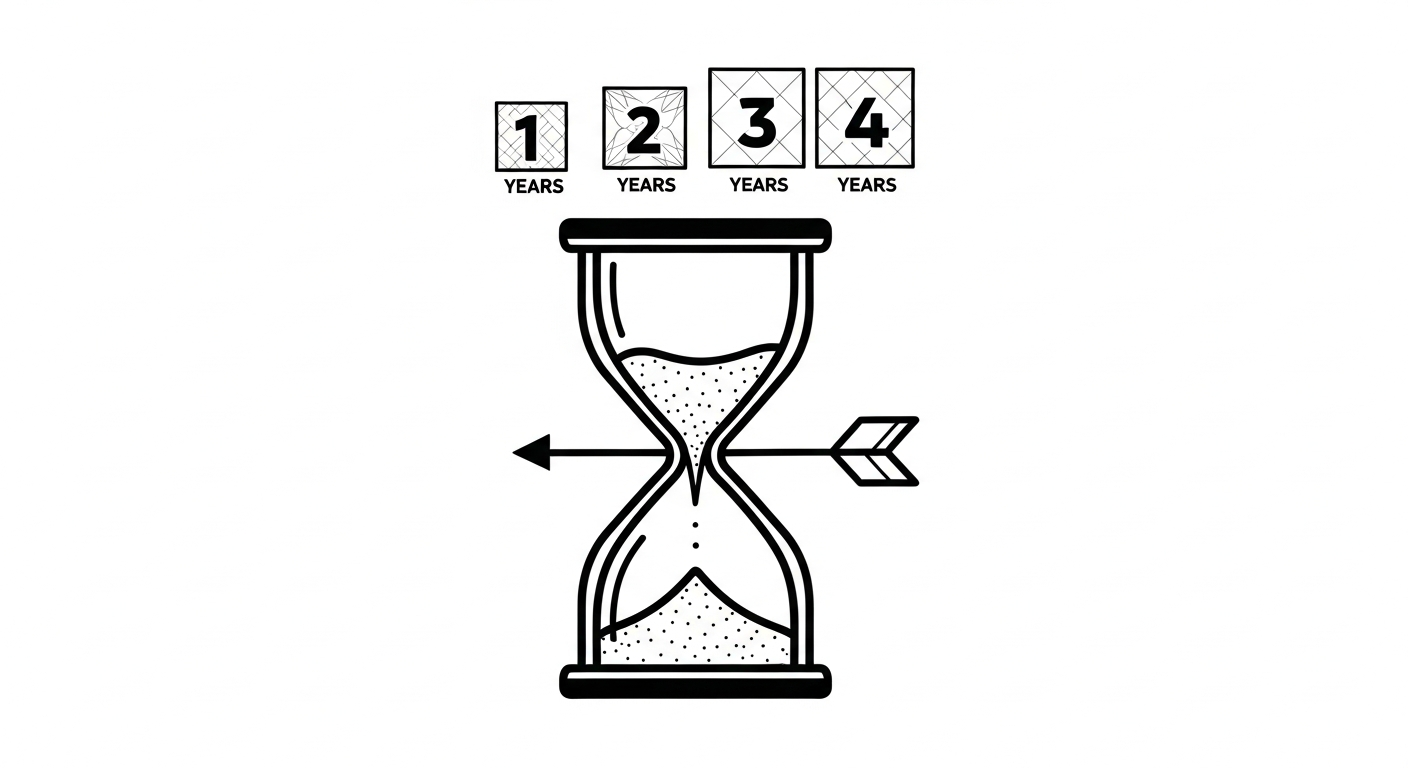
In four years, you can move from writing your first line of code to architecting complex systems. This isn't about being a prodigy. It is about pattern recognition across domains and treating your career like a multi-product studio.
The Four-Year Arc: From Syntax to Systems
Most people stall because they focus on the medium rather than the system. They spend years trying to become a specialist in a specific framework. A self taught senior engineer understands that frameworks are just instruments. The work is the system the medium serves.
Year One: Shipping the First Artifacts
In the first year, your goal is volume. You need to understand the request-response cycle, how data moves from a database to a UI, and how to deploy a basic application. Don't worry about clean code yet. Worry about whether the thing works.
I started by building small tools for my own businesses. I wasn't trying to get a job; I was trying to solve a problem. When you solve real problems, you learn the constraints of the environment. You learn why a database connection fails and how to read a stack trace. This is the foundation of agentic engineering—learning how to direct tools to achieve a specific outcome.
Year Two: Pattern Recognition and the Monorepo
By year two, you should be noticing that most software is the same five or six patterns repeated. You are no longer just writing code; you are managing state and handling side effects. This is where you should start working in public.
I found that moving to a monorepo architecture early on allowed me to see the connections between the frontend, the backend, and the infrastructure. When you manage the entire stack, you stop seeing yourself as a specialist and start seeing yourself as an integrator. You aren't just building a feature; you are building a product.
Year Three: Operations and Infrastructure
A senior engineer is defined by what happens after the code is merged. This year is about CI/CD, monitoring, and infrastructure as code. You need to know how to scale a system without it breaking.
I learned this through an eight-thousand-SKU e-commerce relaunch. It wasn't the code that was difficult; it was the operations. It was the data migration, the caching layers, and the deployment pipelines. If you can't operate what you build, you aren't a senior engineer yet.
Year Four: Architecting the Operating Layer
In the final stretch of this arc, you stop being the primary author of every line of code. You become the architect. This is where you leverage AI as the team. In my studio, I use agents to handle research, monitoring, and boilerplate.
As a self taught senior engineer, your value is in your ability to design the system that the agents execute. You are the lens through which the project is viewed. You understand the business logic, the technical constraints, and the user needs. You are shipping today at a pace that was impossible five years ago.
Why the "Self-Taught" Label is a Distraction
There is a tendency to apologize for a non-traditional path. I’ve run music businesses, Army logistics operations, and real estate teams. None of those required a computer science degree, but all of them required the ability to manage complex systems under pressure.
Software is just the latest dialect of operations. The label "self-taught" doesn't mean you lack a formal education; it means you have the discipline to build your own curriculum. The industry is full of people who have the credentials but can't ship a finished product. The work credentials you. The artifact is the only proof that matters.
Agentic Engineering: The Senior Multiplier
The transition to senior-level work today requires a different relationship with AI. You shouldn't be using LLMs just for autocomplete. You should be architecting an operating layer where AI handles the low-leverage tasks.
In my current workflow, I use a custom agent orchestration layer. This allows me to run a multi-product studio with AI as the team. This isn't about replacing the engineer; it's about elevating the engineer to an architect. When you can direct an agent to refactor a module or write a test suite, you are operating at a higher altitude. This is what separates a junior from a self taught senior engineer in the current market.
Profit Before Revenue, Craft Before Scale
A senior engineer understands the business. If you build a technically perfect system that loses money, you have failed. I build small, well-run, and durable systems. I prioritize profit-first architecture.
This means picking the right tool for the job, even if it isn't the trendiest. It means knowing when to use a managed service and when to build it yourself. It means understanding that your job is to create value, not just to write functions.
How to Close the Gap
If you are currently in the middle of this arc, stop looking for the next tutorial. Start building a system that solves a problem you actually have. Document the process. Show the before and after. Show what broke and how you fixed it.
I am happy to talk about how to structure these systems or how to integrate agentic workflows into your current process. The goal is to move from being a consumer of tools to a builder of systems.
Work through this in a 1:1 strategy session through Total Ventures — totalventures.io/booking
Studio Notes
How I’m building the studio.
The operator’s log — systems, decisions, and what’s working.
Written by
Founder, Total Ventures
Solo-founder building a multi-brand product studio with AI agents. Writing about building, operating, and shipping.

