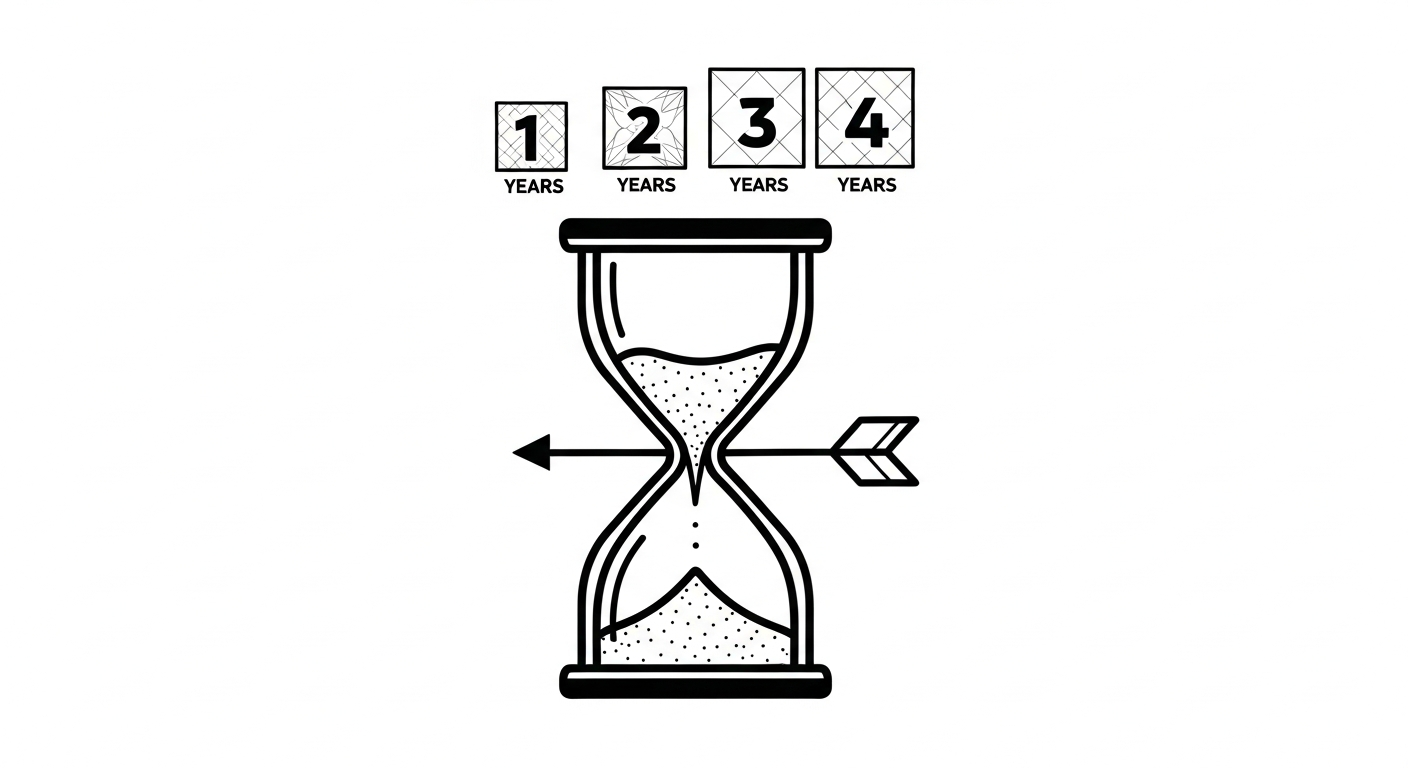
The path to becoming a self taught senior engineer is often framed as a struggle against credentials. It isn't. The industry doesn't care where you learned to code; it cares what you can ship today. Seniority is not a reward for time served. It is a recognition of your ability to manage complexity, architect systems, and deliver outcomes without hand-holding.
I didn't start in a computer science classroom. I started in music, then moved through Army logistics and real estate operations. By the time I committed to software, I already had an operating system for how things work. Software was just the latest dialect. If you want to compress a decade of career growth into four years, you have to stop thinking like a coder and start thinking like an architect.
The Shift from Syntax to Systems
In the first year, most people focus on the syntax. They want to know the right way to write a function or the best library for state management. This is the floor. To move toward the level of a self taught senior engineer, you have to look past the code and see the system.
A senior engineer understands that code is a liability. Every line you write is something that can break, something that needs testing, and something that will eventually need to be migrated. I learned the hard way that the most elegant code in the world is worthless if it doesn't serve the business logic or if it's too brittle to survive a production environment.
When you are working in public, your focus should be on the artifact. Don't just show a snippet of a UI component. Show the entire deployment pipeline. Show how the data flows from the database to the client and back. When you start thinking in terms of data flow and feedback loops, you are no longer just writing scripts; you are architecting systems.
Pattern Recognition Across Domains
What actually separates a junior from a self taught senior engineer is pattern recognition. This is where my background in logistics and music became a superpower. In the Army, logistics is about managing constraints and ensuring the right resources are in the right place at the right time. In music, composition is about managing tension and release within a structured grammar.
Software is the same. A backend architecture is just a logistics problem for data. A frontend interface is just a composition problem for user attention. When you realize that these patterns are universal, you stop being intimidated by new stacks. You realize that a monorepo in one language solves the same problems as a modular system in another.
To accelerate your growth, look for these patterns in everything you build:
- Idempotency: Can this action be performed multiple times without changing the result?
- Observability: If this breaks at 3 AM, will I know why without digging through raw logs?
- Decoupling: Can I change the database without rewriting the entire business logic?
If you can answer these questions, you are operating at a senior level, regardless of how many years you've been at the keyboard.
Agentic Engineering and the Modern Arc
In the current landscape, being a self taught senior engineer means you are no longer just a consumer of tools. You are an orchestrator of agents. In my studio, I don't write every line of boilerplate. I use AI as the team. This isn't about using a chatbot to write a function; it's about agentic engineering.
I've architected a system where agents handle the research, the initial scaffolding, and the monitoring of our infrastructure. This allows me to stay at the architecture level. If you are still spending your days fighting with CSS centering or basic CRUD operations, you are falling behind.
The modern senior engineer knows how to prompt, how to verify, and how to integrate. You need to understand the underlying principles well enough to know when the AI is hallucinating a solution that will break under load. You are the pilot; the AI is the engine.
Shipping as the Only Credential
I don't care about your certifications. I care about what you have shipped. The transition to a self taught senior engineer is complete when the medium no longer matters. Whether I am building a fintech backend or a music production tool, the process is the same: identify the constraint, architect the solution, and ship the artifact.
Working in public is the best way to prove this. Don't tell people you understand distributed systems; show them a repository where you've implemented a message queue to handle high-traffic spikes. Don't tell people you understand DevOps; show them a live URL with a 99.9% uptime and an automated CI/CD pipeline.
The work credentials you. If you can point to a system that is running, generating value, and surviving the real world, no one will ask to see your degree.
The 4-Year Roadmap
If I were starting over today, here is how I would structure the arc:
- Year 1: The Builder. Focus on shipping. Build 10-20 small projects. Learn how to get things from local host to a live URL. Understand the basics of the web: HTTP, databases, and the DOM.
- Year 2: The Integrator. Start connecting systems. Learn how to use APIs, how to manage authentication, and how to handle state across a complex application. This is where you learn the hard way about technical debt.
- Year 3: The Architect. Stop building features and start building systems. Focus on monorepo structures, automated testing, and infrastructure as code. Start using AI to handle the low-level implementation while you focus on the design.
- Year 4: The Operator. Run your own studio or lead a team. Focus on the business outcome. Understand the cost of your infrastructure and the ROI of your features. At this point, you are a senior engineer because you are responsible for the entire lifecycle of the product.
This isn't a shortcut. It's a concentrated effort. It requires a builder-first mentality and a refusal to get bogged down in the hype.
If you're ready to move from writing code to architecting systems, the next step is to look at your current workflow. Are you building features, or are you building a product?
Work through this transition in a 1:1 strategy session through Total Ventures — totalventures.io/booking. We can look at your current stack and map out the path to your next level of seniority.
Happy to talk.
Studio Notes
How I’m building the studio.
The operator’s log — systems, decisions, and what’s working.
Written by
Founder, Total Ventures
Solo-founder building a multi-brand product studio with AI agents. Writing about building, operating, and shipping.
