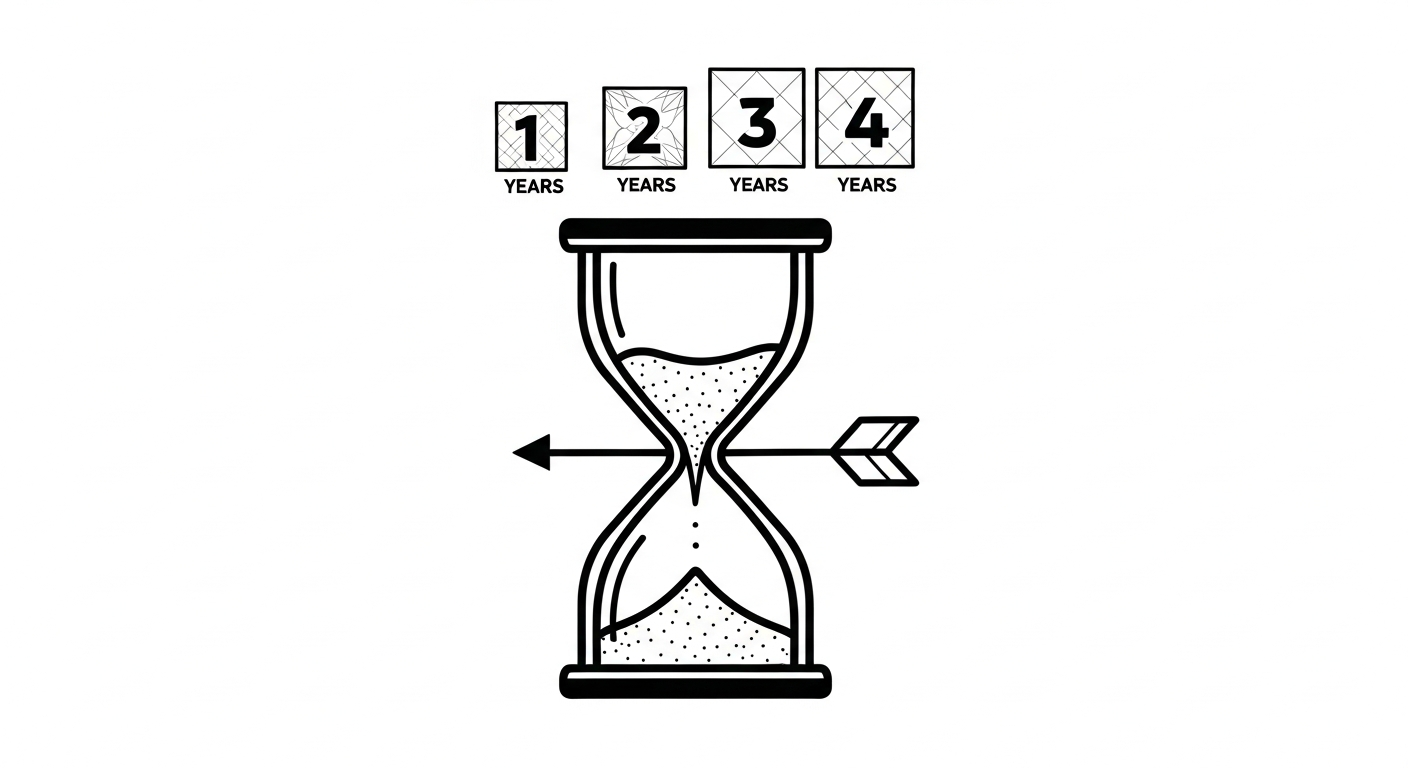
The path to becoming a self taught senior engineer isn't about memorizing the latest syntax or collecting certifications. It is about the transition from writing code to architecting systems. I learned the hard way that the industry doesn't care how you learned; it cares what you can ship and how reliably you can do it.
In my four-year arc from writing my first lines of production code to running a multi-product studio, the most important realization was that software is just another medium for operations. Whether I was managing logistics in the Army National Guard or relaunching an eight-thousand-SKU e-commerce platform, the underlying patterns remained the same. If you want to reach senior-level work without a traditional background, you have to stop thinking like a coder and start thinking like an operator.
The Four-Year Arc: From Syntax to Systems
Most people get stuck in the 'junior' phase because they focus on the wrong layer. They spend years becoming an 'expert in React' or 'expert in TypeScript.' This is a mistake. Frameworks are instruments, not the symphony. A self taught senior engineer understands that the stack is secondary to the system.
In the first year, you learn the grammar. You learn how to make the machine do what you want. In the second year, you learn how to stop breaking things. By the third year, you should be looking at the business logic—the money layer. By the fourth year, you aren't just writing code; you are designing the environment where code lives, scales, and generates profit.
I didn't get to senior-level work by doing more tutorials. I got there by shipping today, failing in public, and fixing the mess. When you move from 'how do I write this function?' to 'how does this service impact the cold start and the bottom line?', you have crossed the threshold.
Your Previous Career is Your Secret Architecture
If you are coming to software from another industry, do not apologize for your path. Your previous experience is not a distraction; it is your accumulated operating system.
When I was running a music business at nineteen, I was learning about feedback loops and audience engagement. In the Army, I learned about high-stakes logistics and redundant systems. When I worked on Super Bowl commercials, I learned about the precision of high-pressure production workflows.
What actually separates a junior from a self taught senior engineer is the ability to recognize these patterns across domains. A senior engineer sees that a backend migration is just a logistics problem. A state management issue is just a communication breakdown. Use your 'non-technical' background to inform your technical decisions. It gives you a lens that someone who has only ever seen a terminal will never have.
Agentic Engineering: The New Senior Standard
Operating as a self taught senior engineer in an AI-native world looks different than it did five years ago. I don't spend my time fighting with autocomplete. I run a studio where AI is the operating layer. This is what I call agentic engineering.
Instead of writing every line of boilerplate, I architect the agent systems that handle research, monitoring, and infrastructure. I use tools like Claude Code and custom MCP servers to handle the heavy lifting while I focus on the system architecture.
To reach a senior level today, you must be an integrator. You need to know how to orchestrate agents to do the work of a traditional team. This isn't about 'AI replacing developers'; it's about senior engineers becoming the architects of automated workflows. If you can't manage an AI-driven pipeline, you are already behind.
Shipping Today: The Only Metric That Matters
I have no interest in performative metrics. I don't care about your PR count or how many tickets you closed this week. I care about the artifact.
Seniority is earned through the weight of what you have shipped. When I talk about shipping today, I mean moving a product from a concept to a live, revenue-generating environment. This requires a deep understanding of the entire lifecycle:
- Infrastructure: Can you deploy and monitor your own work?
- Operations: Does the system require constant manual intervention, or is it self-healing?
- Profit: Does the technical complexity justify the business outcome?
If you want to accelerate your career, stop building 'to-do' apps and start building systems that solve real problems. Work in public. Show the commit, show the before/after, and show the lesson learned when it broke. The work credentials you; the degree does not.
Building a Durable Operating System
The transition to self taught senior engineer happens when you stop looking for permission. You don't need a title to start thinking like an architect. You need to build small, well-run, and durable systems.
I build from behind the keyboard, focusing on craft before scale and profit before vanity. This approach has allowed me to run a multi-brand studio without a massive headcount. It’s about leverage. AI is the leverage, and your experience is the fulcrum.
If you are currently in the middle of this pivot, focus on the systems. Learn the infrastructure. Understand the money. Ship something every day, even if it’s small. The compounding effect of these actions over four years is what creates a senior-level operator.
I am happy to talk about how to structure your own studio or move into agentic engineering. The path is open to anyone willing to do the work and ignore the hype.
Next Step: Audit your current project. Identify one manual process—whether it's deployment, testing, or data entry—and architect an agentic workflow to automate it. Stop being the worker and start being the architect.
Studio Notes
How I’m building the studio.
The operator’s log — systems, decisions, and what’s working.
Written by
Founder, Total Ventures
Solo-founder building a multi-brand product studio with AI agents. Writing about building, operating, and shipping.


