I spent my twenties running logistics in the Army National Guard and navigating the music business. On paper, those roles have nothing to do with running a multi-product studio or architecting agentic systems. In practice, they are the same work.
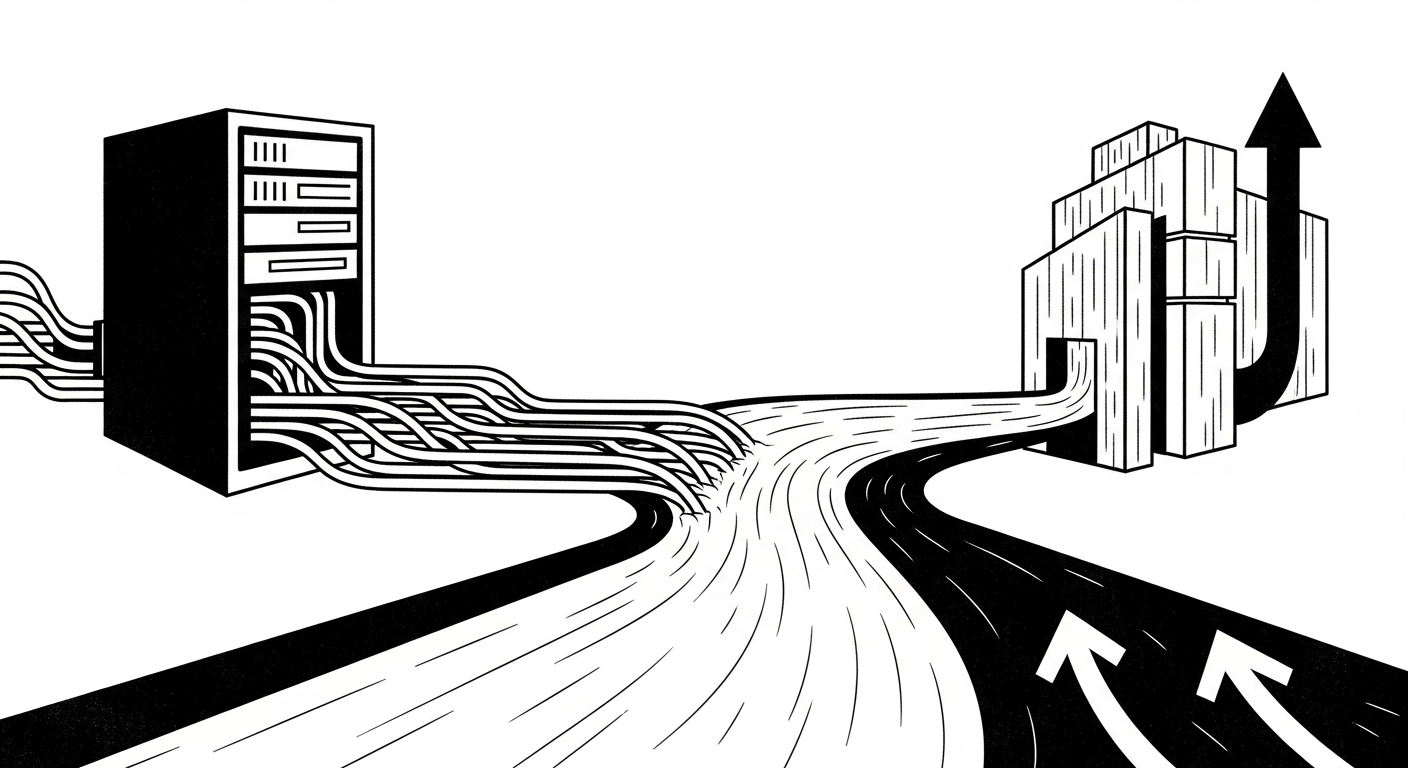
If you are considering a career change into tech, stop looking at your past as a liability. You aren't starting over; you are porting an existing operating system into a new dialect. Code is just the latest medium for the systems you’ve already been building.
The Myth of the Clean Slate
Most advice regarding a career change into tech tells you to bury your previous life. They suggest you focus on becoming an "expert in TypeScript" or a "React developer." This is a mistake. When you lead with a tool, you compete with everyone else who just learned that tool. When you lead with your ability to manage systems, you compete with no one.
I learned the hard way that the market doesn't care about your certificates. It cares about your ability to solve a problem and ship a solution. Whether I was managing an eight-thousand-SKU e-commerce relaunch or production workflows for Super Bowl commercials, the underlying logic was identical: identify the constraints, architect the flow, and ensure the output meets the requirement.
Software is just the most efficient way to scale that logic.
Systems Thinking Across Domains
Your previous experience is an accumulated operating system. The most successful examples of a career change into tech I’ve seen come from people who realize they aren't starting from zero.
Logistics is a State Machine
In the military, logistics is about moving assets from point A to point B through a series of verified states. If the fuel doesn't arrive, the trucks don't move. If the trucks don't move, the mission fails. This is exactly how a backend architecture works. You are managing data flow, handling errors, and ensuring state consistency. If you can manage a supply chain under pressure, you can manage a database migration.
Music is Syntax and Pattern Recognition
Music has grammar. It has structures, loops, and recursive patterns. Writing a melody is an exercise in working within constraints to produce a specific emotional or functional output. When I moved from music to software, I didn't see new concepts; I saw familiar patterns expressed through a keyboard instead of a fretboard.
Operations is Feedback Loops
If you’ve run a real estate team or a small business, you’ve managed feedback loops. You’ve looked at a process, identified where it broke, and engineered a fix. That is debugging. Navigating a career change into tech requires moving from a consumer mindset to a builder mindset, where every failure is just a data point in a larger system.
Building the Artifacts, Not the Resume
I don't believe in the traditional resume. I believe in the artifact. When you are working in public, the work credentials you.
Instead of telling a hiring manager you have "only four years of experience," show them the monorepo you built. Show them the agentic engineering system you architected to handle your own operations. Show them the specific commit where you shaved 300ms off a cold start.
When you approach a career change into tech as an architect of systems rather than a student of syntax, the path clears. You stop asking for permission to be a developer and start shipping today.
AI as the Operating Layer
In my studio, I don't use AI as a glorified autocomplete. I use it as the team. We are in an era where a single operator can run a multi-product studio because AI handles the heavy lifting of research, monitoring, and boilerplate.
For someone pivoting into tech now, this is your leverage. You don't need to spend five years mastering the minutiae of every framework. You need to master the architecture. You need to know how to direct agents to build the components while you design the system. This is agentic engineering, and it is how small, durable teams are out-shipping legacy departments.
Shipping Today
The transition is never finished. I am still building, still learning, and still breaking things. The goal isn't to reach a destination where you are finally an "expert." The goal is to build a life that supports your craft and your family through well-run, durable systems.
If you are coming from a non-traditional background, your edge is your perspective. You see the world through a lens that someone who has only ever written code cannot. Use it. Port your operating system. Start shipping.
Happy to talk.
Next Step: If you're ready to move from learning to building, download the free Studio Launch Checklist to see how I structure my projects from day one — totalventures.io/resources/launch-checklist
Studio Notes
How I’m building the studio.
The operator’s log — systems, decisions, and what’s working.
Written by
Founder, Total Ventures
Solo-founder building a multi-brand product studio with AI agents. Writing about building, operating, and shipping.
