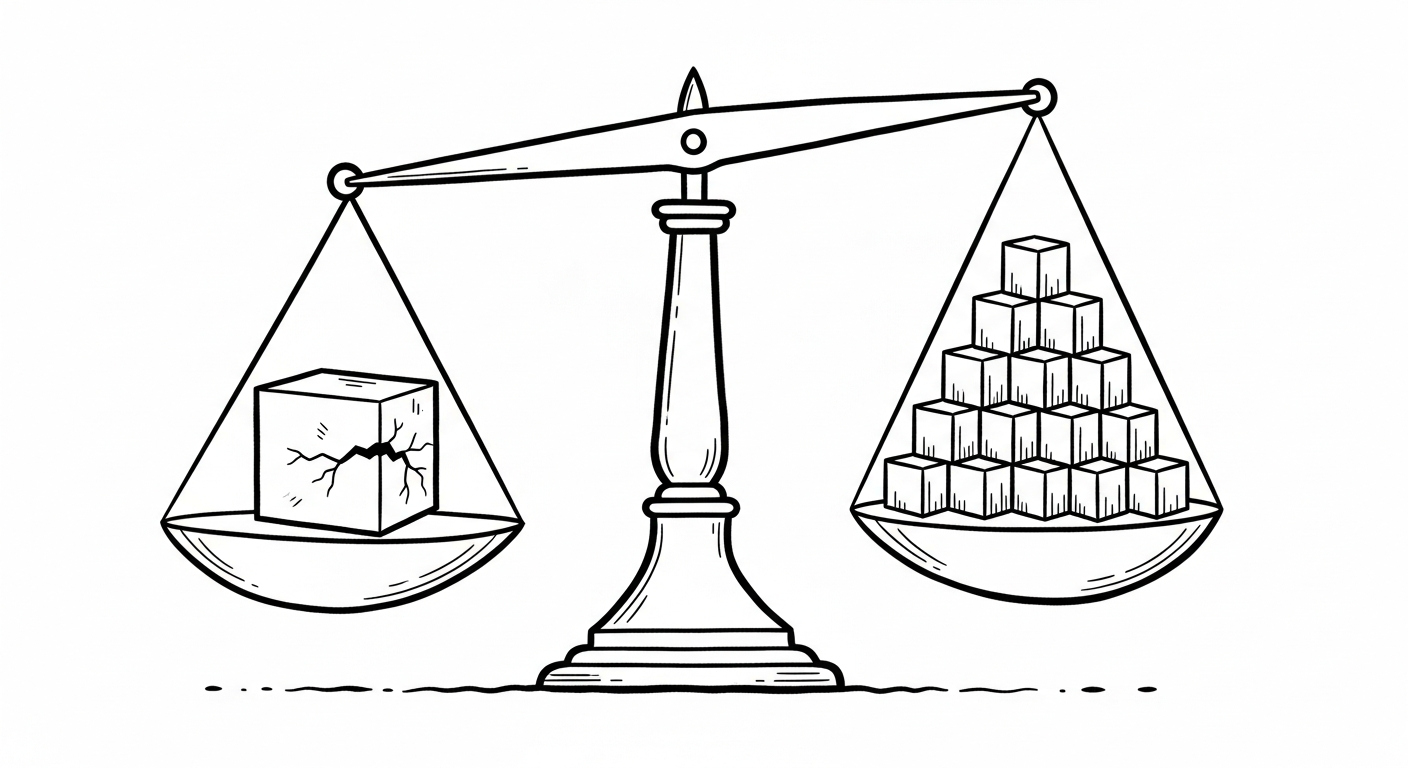
If you're running a digital product, you've likely accumulated a collection of one-off scripts designed to check if X is in sync with Y. A cron job for database consistency, another for API endpoint health, a third for file integrity. Each one a small, necessary piece of operational hygiene, but together, they become a maintenance burden. The solution isn't more individual scripts; it's a unified audit framework where adding a new "is X in sync with Y" check is a single registered file, and its status shows up on a dashboard for free.
This isn't about bolting on another monitoring tool. It's about designing an operating system that scales with a single operator. The machine I've built at Total Ventures relies on this principle: abstracting common operational patterns into reusable systems. Drift detection is one of those patterns. When you collapse the cost of building software, the discipline to operate what you build becomes the differentiator. This framework is a direct application of that discipline.
The Problem with Ad-Hoc Drift Detection
Every time you discover a potential data inconsistency or a service misconfiguration, the natural impulse is to write a script. It's fast, it solves the immediate problem, and it gets deployed. But these scripts often live in disparate locations, lack consistent reporting, and require manual intervention to interpret. Over time, they become a collection of dark matter in your operational galaxy—essential but unmanaged. You spend more time maintaining the checks than benefiting from the insights they provide. This is a tax on your attention, and attention is the most valuable asset for a solo operator.
Architecting a Unified Audit Framework
The core idea is simple: centralize the execution and reporting of all your system health and consistency checks. Think of it as a single, intelligent agent whose job is to run all registered audits and present their findings. Here’s how it breaks down:
1. The Centralized Runner
At the heart of the system is a single, scheduled process—a robust cron job, for instance—that orchestrates all audit executions. This runner doesn't know what to check, only how to find and execute the checks. It iterates through a predefined directory of audit files, executes each one, and collects its output. This is where the power of claude-code-workflows comes into play, allowing for dynamic execution and interpretation of these audit scripts.
2. Registered Audit Files
Each audit is a self-contained script or module, written in a consistent format (e.g., a Python script, a shell script, or a JavaScript module). These files adhere to a simple interface: they perform a specific check and return a standardized result (e.g., PASS, FAIL, WARNING, along with a message and any relevant data). For example, an audit file might check if all S3 buckets have the correct access policies, or if a specific database table has a row count within an expected range. The beauty is that you can add a new audit simply by dropping a new file into the designated directory.
3. The Results Store and Dashboard
After each run, the centralized runner pushes the results of all audits into a structured data store—a simple database or even a set of JSON files. A lightweight dashboard then reads from this store, providing a real-time overview of your system's health. You see at a glance which checks passed, which failed, and the details of any issues. This single pane of glass replaces the need to dig through individual cron logs or scattered reports. It's a direct, unambiguous signal of what needs attention.
Operationalizing with AI Agents
This framework isn't just about reporting; it's about enabling a more agentic approach to operations. When an audit fails, the system can trigger an alert that is then routed to a specialized AI agent. This agent, leveraging claude-code-workflows, can be tasked with investigating the failure, gathering more context, and even suggesting or executing a remediation step. For instance, if an audit flags a misconfigured firewall rule, an agent could cross-reference the expected configuration, identify the discrepancy, and propose a fix for your review. This moves you from reactive debugging to proactive system management, with the machine doing the heavy lifting.
The Owner's Perspective: Building to Keep
As an owner, my focus is on building systems that compound value and reduce operational overhead. This audit framework is a prime example. It's not a temporary fix; it's a foundational piece of infrastructure built to keep. It ensures that as Total Ventures grows its portfolio of products, the underlying operational complexity doesn't overwhelm the single operator. It's about leverage—using well-designed systems to multiply your output without multiplying your headcount.
This approach frees up mental bandwidth. Instead of constantly wondering if something is out of sync, you trust the system to tell you. That trust allows you to focus on building new features, refining existing products, and making strategic bets, rather than getting bogged down in reactive maintenance. It's the difference between working in the business and working on the business.
Stay close to the work by subscribing to the newsletter for more insights on building and operating with AI agents.
Studio Notes
How I’m building the studio.
The operator’s log — systems, decisions, and what’s working.
Written by
Founder, Total Ventures
Solo-founder building a multi-brand product studio with AI agents. Writing about building, operating, and shipping.