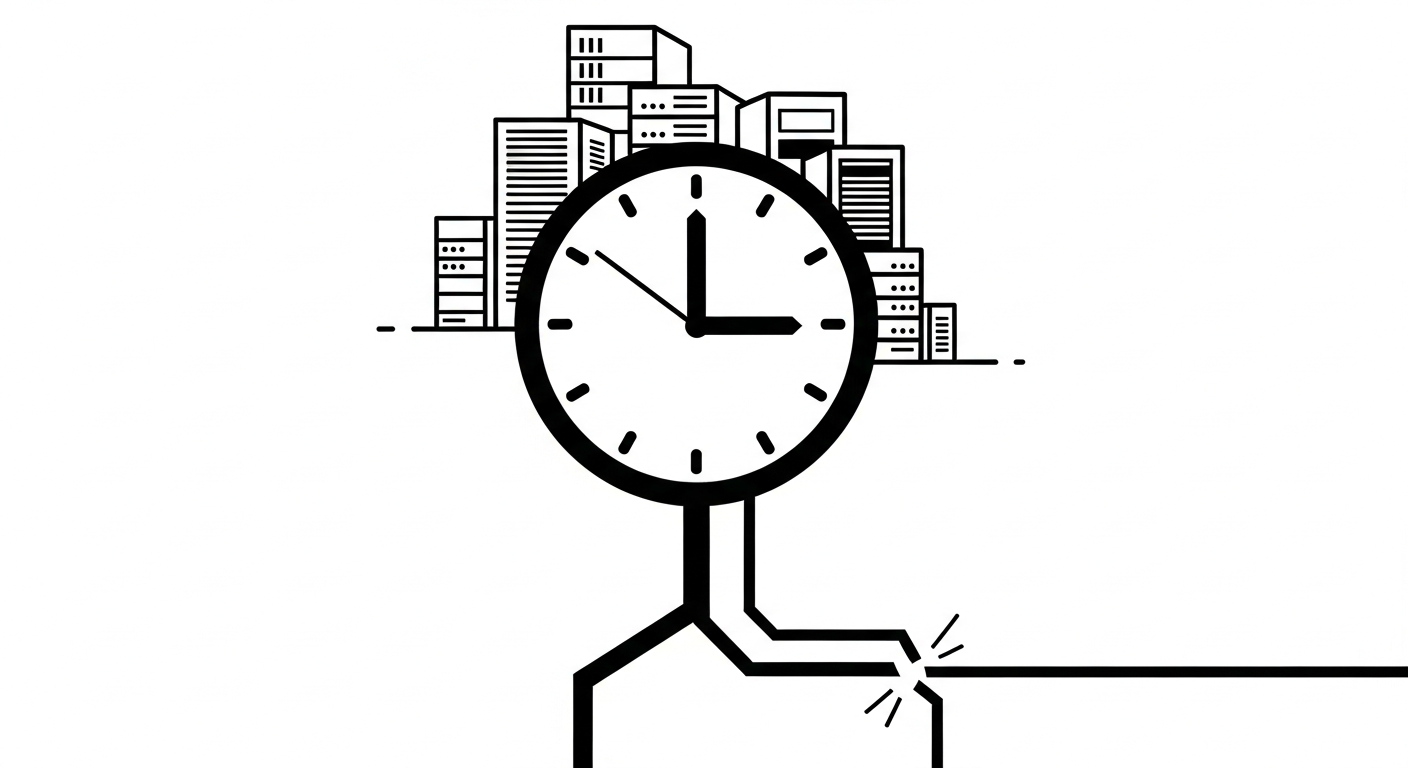
My editorial newsletter went silent for a week. The reason? A cron job, designed to fan out to a specific audience segment via Resend, was routing to the wrong place. It's a simple mistake with a clear lesson: any automated broadcast to humans needs an explicit destination test, not just a 'should be fine' assumption.
When you're building systems that interact directly with your audience, especially through scheduled communications, the stakes are higher than a typical backend process. A silent newsletter isn't just a missed email; it's a break in trust and a missed opportunity for connection. This incident, part of the ongoing pph-build efforts, highlighted a critical blind spot in my deployment process.
The Anatomy of a Silent Cron
Cron jobs are the silent workhorses of many digital products. They handle everything from data backups to scheduled content delivery. In my case, a specific cron was responsible for compiling and sending the weekly editorial newsletter for one of my consumer brands. The system was designed to pull content, format it, and then hand it off to Resend, specifying a particular audience segment for delivery.
The Deployment Oversight
During a recent deployment, a configuration change was made to how audience segments were identified. The intention was to streamline the process, but an oversight occurred. While the cron job itself was running successfully and interacting with the Resend API, the audience_id it was passing was incorrect. Instead of targeting the active subscriber list, it was pointing to an empty or inactive segment.
The immediate problem wasn't a system crash or an error message. The cron reported success. Resend reported success. The emails simply weren't reaching the intended recipients. This is the insidious nature of routing errors: the system believes it's working perfectly, even as the real-world outcome is completely off-target.
Why a 'Should Be Fine' Assumption Fails
It's easy to assume that if a cron job executes without error, and the API calls return 200 OK, then everything is working as intended. This assumption holds true for many internal processes where the output is machine-readable or easily verifiable through logs. However, when the final output is a human-facing communication, the definition of 'success' changes.
For a pph-build like this, success isn't just about the code running; it's about the right message reaching the right person at the right time. My assumption was that the audience_id mapping, once set, would remain stable across environments and deployments. I learned the hard way that this is a dangerous assumption when dealing with external services and human recipients.
Implementing Explicit Destination Testing
The solution, in hindsight, is straightforward: explicit destination testing. This means adding a verification step that confirms the email actually landed in the correct segment's inbox, or at least that the API call was made with the correct segment identifier.
Pre-Deployment Checks
Before any cron job that broadcasts to humans goes live, especially after configuration changes, I now implement a series of checks:
- Configuration Review: A manual review of the
audience_idor equivalent destination parameter in the deployment configuration. This is a simple, yet often overlooked, first line of defense. - Staging Environment Test: Running the cron in a staging environment with a small, controlled test segment. This allows for end-to-end verification without impacting live users.
- API Payload Inspection: For critical broadcasts, logging the actual API payload sent to Resend (or similar service) to confirm the
audience_idis correct. This can be done with a temporary debug flag.
Post-Deployment Monitoring
Beyond pre-deployment checks, ongoing monitoring is crucial:
- Recipient Count Verification: After a broadcast, checking the number of recipients reported by Resend against the expected audience size. A significant discrepancy is an immediate red flag.
- Spot Checks: For high-stakes communications, a manual spot check of a few actual recipient inboxes (if permissible and practical, e.g., internal test accounts) to confirm delivery and content.
- Alerting on Zero Sends: Setting up alerts for cron jobs that are expected to send emails but report zero recipients. This would have caught the
pph-buildissue much sooner.
The Broader Lesson for Agentic Engineering
This incident underscores a broader principle in agentic engineering: while AI agents can automate vast swathes of work, the human operator's judgment remains paramount for critical, human-facing outputs. The machine can execute perfectly according to its instructions, but if those instructions are flawed, the outcome will be too.
My fleet of AI agents handles much of the content generation and scheduling for the newsletter. They perform their tasks flawlessly. The error wasn't in their execution, but in the human-configured routing instruction they were given. This reinforces the idea that the operator's role shifts from execution to architecture, oversight, and the design of robust verification systems.
As I continue to refine the pph-build processes and other product lines, this lesson is now baked into the deployment pipeline. Trust, once broken, is hard to rebuild. Ensuring that every communication reaches its intended audience is a fundamental responsibility of building and operating digital products.
What systems do you have in place to ensure your automated communications always hit their mark?
Studio Notes
How I’m building the studio.
The operator’s log — systems, decisions, and what’s working.
Written by
Founder, Total Ventures
Solo-founder building a multi-brand product studio with AI agents. Writing about building, operating, and shipping.