Most advice regarding a career change into tech starts with a fundamental lie: that you need to start over.
You are told to wipe the slate clean, spend six months in a bootcamp learning syntax you could have looked up in a manual, and apologize for the decade you spent doing something else. This is a waste of your most valuable asset.
I didn’t start in software. I ran a music business at nineteen, managed logistics as a Senior NCO in the Army National Guard, and handled operations for a real estate team that moved nine million in volume annually. I learned the hard way that these aren't separate lives. They are the same operating system ported to different mediums.
If you are looking to make a career change into tech, you don't need a new identity. You need to recognize the patterns you’ve already mastered and apply them to systems that scale.
The Operating System Framework
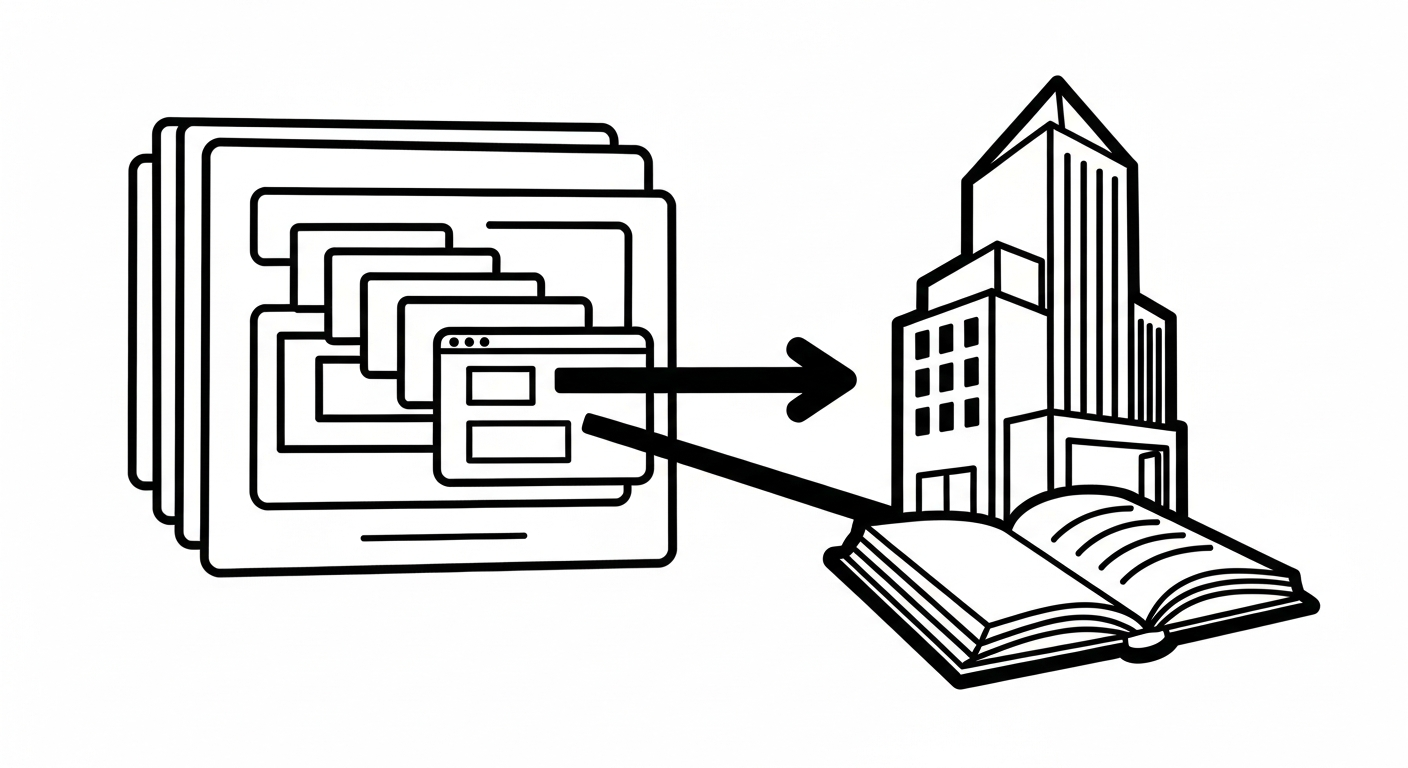
Software is just a dialect. The underlying logic—the operating system—is what matters. When you approach a career change into tech from a non-traditional background, you aren't behind. You are often better equipped to handle the complexity of real-world systems than someone who has only ever seen a terminal.
From Logistics to Logic
In the Army, logistics is about dependencies. If the fuel doesn't arrive, the trucks don't move. If the trucks don't move, the mission fails. This is exactly how a backend architecture works. A database timeout is just a supply chain bottleneck. If you can manage a movement of personnel and equipment across state lines, you can manage a data pipeline. The syntax changes; the requirement for precision does not.
From Composition to Code
Music has a grammar. It has structures, repeating patterns, and strict rules that allow for creative expression. Writing a melody and writing a function require the same mental model: you are organizing discrete elements into a coherent whole that performs a specific function. When I’m shipping today, I’m using the same part of my brain that I used to arrange a score.
Agentic Engineering: The New Entry Point
The barrier to entry for a career change into tech has fundamentally shifted. We are moving past the era where you had to spend years mastering the nuances of a specific framework before you could be useful.
In my studio, I use AI as the operating layer. I’ve architected an agent orchestration system called VERA that handles research, monitoring, and infrastructure. This is agentic engineering. It allows a single builder to operate at the level of an entire department.
For someone pivoting into the industry, this is your leverage. You don't need to be a syntax specialist. You need to be a systems architect. If you can define the requirements, understand the feedback loops, and direct the agents to execute the technical heavy lifting, you are already an operator. The goal isn't to write the most lines of code; the goal is to ship the most durable system.
Working in Public Over Credentialing
I don't care about your certifications. I care about what you’ve built. The most effective way to execute a career change into tech is to stop asking for permission and start working in public.
Don't build another todo list app. Build a tool that solves a specific, painful problem from your previous industry.
- If you were in real estate, build an automated lead-scoring engine.
- If you were in music, build a rights-management tracker.
- If you were in the military, build a gear-accountability dashboard.
When you show a finished artifact that solves a real-world problem, the conversation shifts from "Do you have enough experience?" to "How did you solve this?" The work credentials you. I’ve found that shipping a small, working product beats a four-page resume every time.
The Reality of the Pivot
This path is dry. It is often quiet. It involves long hours behind a keyboard, debugging systems that don't care about your feelings or your past successes. But it is also the most direct way to build a life that serves you rather than an employer.
I run a multi-product studio because I wanted to own my time and be present for my family. I didn't get here by being a specialist in one stack. I got here by being an architect of systems who wasn't afraid to port my experience into new domains.
If you are ready to stop being a consumer and start being a builder, the tools are already in your hands. You just have to start shipping.
Happy to talk.
Next Step
Audit your current skill set. Identify the one system you understand better than anyone else—whether it's a supply chain, a musical structure, or a sales funnel—and map out how that logic would look as a software product. Then, build the first version.
Studio Notes
How I’m building the studio.
The operator’s log — systems, decisions, and what’s working.
Written by
Founder, Total Ventures
Solo-founder building a multi-brand product studio with AI agents. Writing about building, operating, and shipping.

