The Artifact: Why Inky Exists
I am shipping today because the work is ready. Inky is a storytelling application designed to bridge the gap between static LLM outputs and coherent, long-form narrative structures. Most people see AI as a way to generate a block of text; I see it as a component in a larger system.
When I started building an ai story app, the goal wasn't to create another wrapper. The goal was to architect a system where AI functions as the operating layer. Inky doesn't just 'ask' a model for a story. It orchestrates a series of agents—researchers, plot architects, and editors—to produce a durable artifact. This is agentic engineering in practice.
The Architecture of Agentic Engineering
In the studio, we don't hire a team of twenty. We build systems that act like one. For Inky, this meant moving away from the single-prompt paradigm. If you want a story that holds together over ten chapters, a single call to Claude or GPT-4 will fail. It will lose the thread, hallucinate character details, and degrade in quality by the third page.
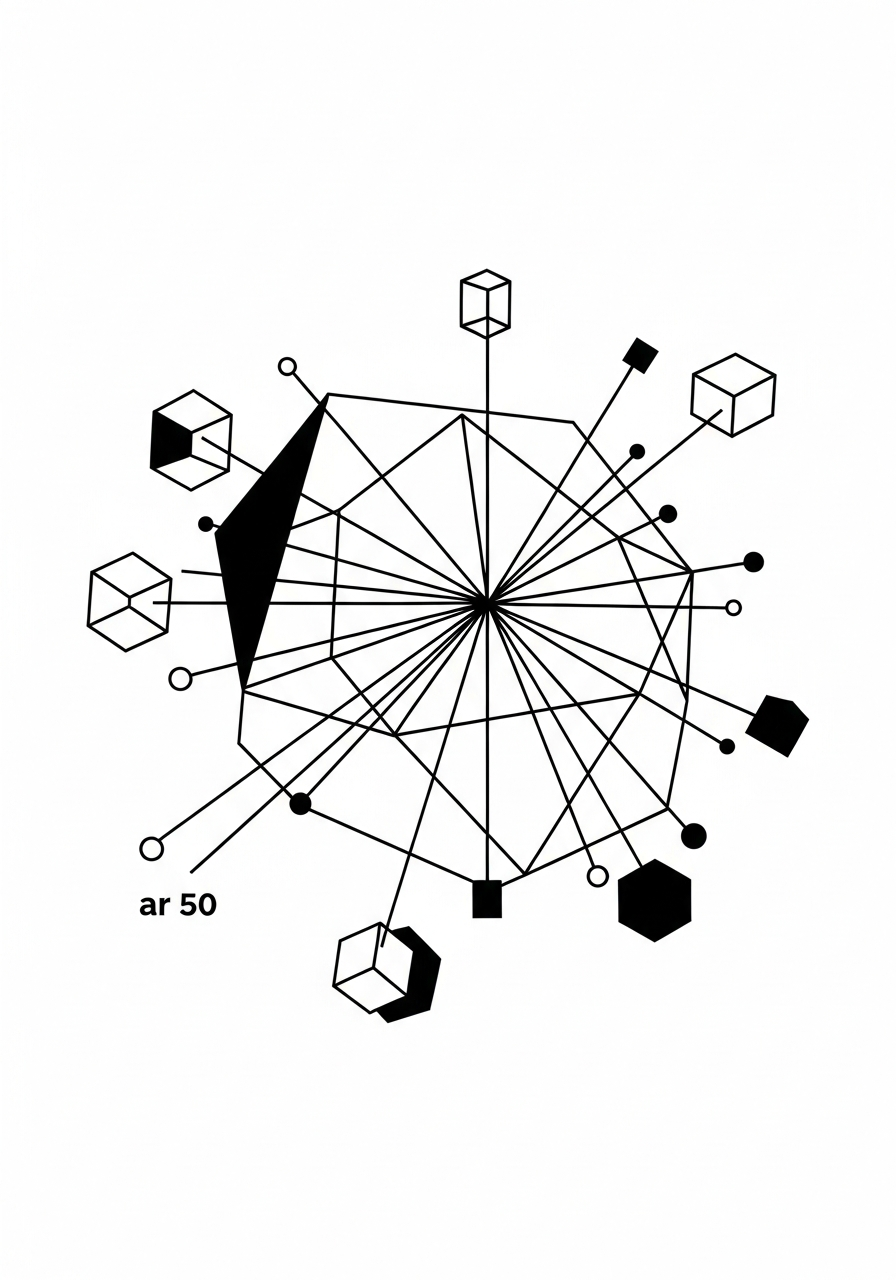
I learned the hard way that the secret to building an ai story app isn't the model you choose—it's the state management you wrap around it. We built a custom orchestration layer called VERA. VERA handles the handoffs between different specialized agents.
State Management and Long-Form Context
The core challenge of building an ai story app is context drift. To solve this, we implemented a 'World State' database. Before any agent writes a single word of a chapter, it queries the World State to see who is in the room, what they know, and what happened in the previous scene. This isn't just a prompt; it's a feedback loop.
We use a combination of vector embeddings for long-term memory and a structured JSON schema for immediate scene state. This ensures that if a character loses a key in chapter two, they aren't magically unlocking a door with it in chapter eight. The system enforces the logic that the LLM often ignores.
Learned the Hard Way: Latency and Cost
Building in public means being honest about the friction. When you move from one prompt to an agentic workflow, your latency spikes. In the early versions of Inky, generating a full story structure took nearly three minutes. That is unacceptable for a modern digital product.
We solved this by moving to an asynchronous, event-driven architecture. The user sees the 'Architect' agent working in real-time—streaming the plot points as they are finalized—while the 'Researcher' agent works in the background to flesh out the world-building. This turns a wait time into a feature of the experience.
Cost is the other factor. Running multiple high-reasoning model calls for a single user action can eat margins quickly. We optimized by using smaller, faster models for the 'Editor' and 'Researcher' roles, reserving the heavy-duty models only for the final narrative synthesis. Profit comes before vanity metrics; if the unit economics don't work, the system is broken.
The Stack: Choosing Instruments, Not Credentials
I don't care about being an expert in a specific framework. I care about what ships. For Inky, the stack is a reflection of the need for speed and reliability. We use a monorepo architecture that allows a solo operator to manage the frontend, the agent orchestration, and the infrastructure without context switching.
- Orchestration: VERA (Custom agent layer)
- Intelligence: Claude API for reasoning, Gemini for high-volume context processing
- Database: PostgreSQL for structured state, Pinecone for vector memory
- Infrastructure: Serverless functions to handle the bursty nature of agentic workloads
This isn't about using the latest 'game-changer' tool. It's about picking the right instrument for the job. The monorepo allows me to move fast, catch breaking changes in the schema immediately, and deploy the entire system with a single command.
Operating the Studio
Running a multi-product studio means I don't have time for theater. Every hour spent on Inky has to contribute to the accumulated operating system of the studio. The lessons we learned while building an ai story app—specifically around agent handoffs and state persistence—are already being ported over to our other products.
This is how we scale without a headcount. We build the system once, refine it through the fire of shipping a real product, and then reuse that architecture across the board. AI isn't replacing the builder; it's providing the leverage for the builder to act as an architect.
If you are looking at building an ai story app today, stop focusing on the prompts. Start focusing on the feedback loops and the state management. The model is just the engine; you still need to build the car.
Happy to talk.
Next Step
If you want to see the exact framework I use to move from an idea to a shipped agentic system, the full implementation is available in The Builder's Playbook — totalventures.io/resources/builders-playbook
Studio Notes
How I’m building the studio.
The operator’s log — systems, decisions, and what’s working.
Written by
Founder, Total Ventures
Solo-founder building a multi-brand product studio with AI agents. Writing about building, operating, and shipping.

