Building software has changed. What used to require a venture-backed team and a six-month roadmap now requires an operator with a clear thesis and a well-designed system. I recently finished the initial build of Inky, an AI storytelling app designed to create personalized narratives for my son, Jupiter.
When I started building an ai story app, the goal wasn't just to ship a feature. It was to test the limits of the Total Ventures operating model—how one person can architect, build, and run a production-grade application using a fleet of AI agents to do the heavy lifting.
The Thesis: Collapsing the Cost of Creation
The shift we are seeing in the market is fundamental. AI has collapsed the cost of generating code and content. However, it has not collapsed the cost of judgment, taste, or the discipline required to operate a product over the long term.
Inky exists because I wanted Jupiter to have stories where he is the hero, but I also wanted to prove that a solo operator can maintain a portfolio of high-quality digital products without a traditional headcount. The app uses a managed data layer to handle user state and an orchestration layer to manage the complex handoffs between different AI models.
The Architecture of a Solo Studio
When building an ai story app, the temptation is to focus on the prompt. But the prompt is the easiest part. The real work is in the architecture—the plumbing that ensures the story is coherent, the images match the text, and the user experience remains fluid despite the inherent latency of large language models.
The Orchestration Layer
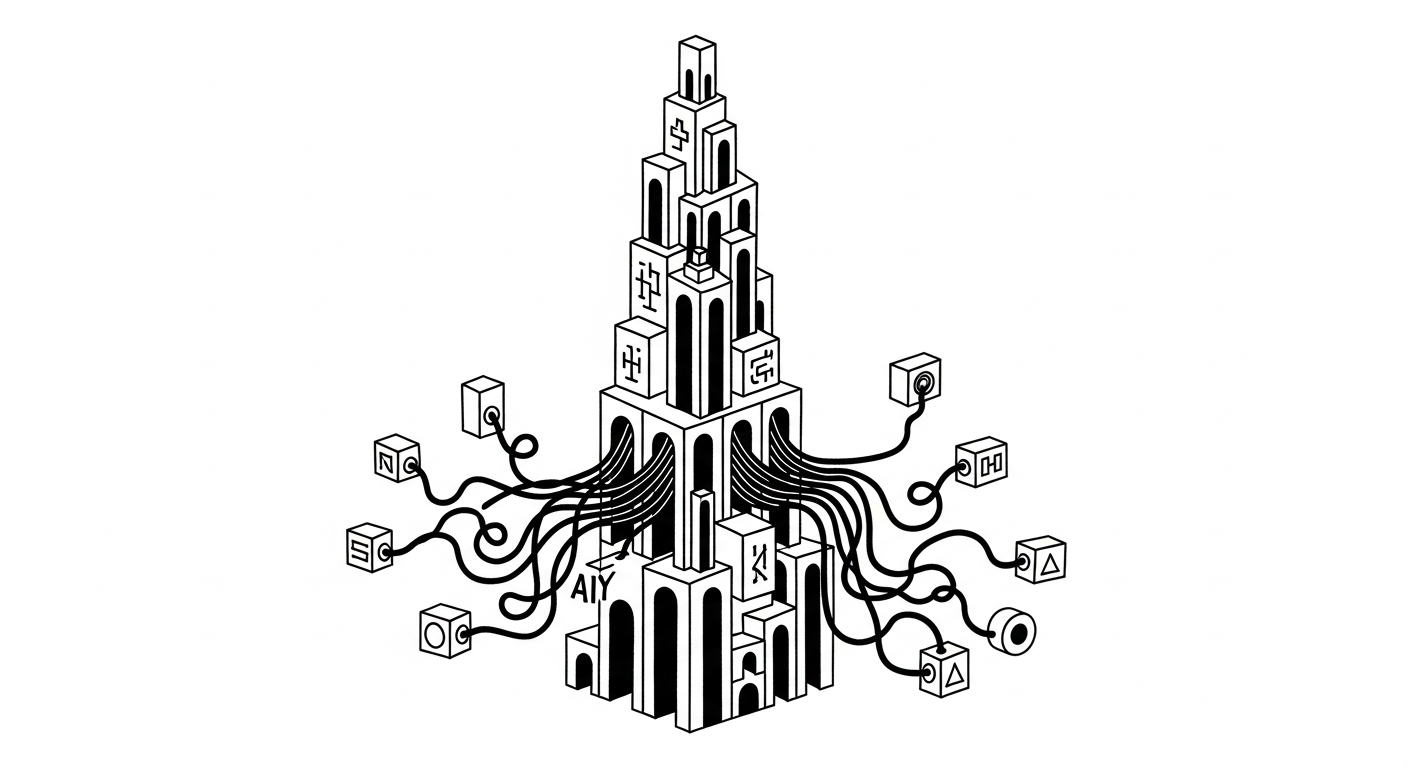
I don't write every line of code anymore. I architect the system and let my agents execute the implementation. This is what I call agentic engineering. For Inky, the orchestration layer handles three distinct phases:
- Narrative Structuring: A specialized agent takes the user's input and builds a multi-chapter story arc. It ensures the pacing is correct for a child's attention span.
- Visual Consistency: A second agent generates descriptions for illustrations, ensuring that the character's appearance remains consistent from page one to page ten.
- State Management: All of this is piped into a relational database that tracks progress, user preferences, and historical stories.
By separating these concerns, I can swap out models or update the logic in one area without breaking the entire system. It’s a modular approach built to keep.
Managing Latency and Feedback Loops
One of the hardest parts of building an ai story app is the wait time. Generating a full story with custom illustrations takes time. Instead of showing a loading spinner, I designed the system to stream the narrative in real-time while the images generate in the background.
This required a robust feedback loop between the frontend and the orchestration layer. We use a pub-sub model to update the UI as each chapter is finalized. It turns a technical constraint into a moment of anticipation for the user.
The Operating Model: Zero Employees, Five Brands
Total Ventures is a digital product studio with zero employees. Inky is one of five brands in the fleet. To make this work, the maintenance of the app must be automated.
I’ve built monitoring agents that watch for errors in the story generation pipeline. If a model returns a malformed response or an image fails to generate, the agent attempts a retry or alerts me if a manual decision is needed. This allows me to work on the business, not in it. I am the human face of the machine, making the high-level calls while the agents handle the execution.
Lessons Learned the Hard Way
Every build teaches you something that the documentation doesn't cover. With Inky, I learned that prompt engineering is less about the words you use and more about the constraints you set.
Early versions of the app would occasionally produce stories that were too complex or lacked a clear resolution. I had to implement a "critic" agent—a separate process that reviews the generated story against a set of pedagogical standards before it ever reaches the user. If the critic isn't satisfied, the story goes back for a rewrite.
This layer of automated quality control is what separates a toy from a product. It’s about applying an owner’s standards to every output the machine produces.
The Path Forward
Building an ai story app in the current climate is a lesson in leverage. The tools are available to everyone, but the advantage goes to the operator who can design the best system to harness them.
Inky is now a stable part of the Total Ventures portfolio. It serves its purpose for Jupiter, and it serves as a blueprint for how we build the next four products. We aren't looking for an exit; we are building to compound.
If you are looking to transition from a developer to an operator, the first step is to stop thinking about features and start thinking about systems. The machine is the moat.
Always forge ahead.
Justin Tsugranes
Studio Notes
How I’m building the studio.
The operator’s log — systems, decisions, and what’s working.
Written by
Founder, Total Ventures
Solo-founder building a multi-brand product studio with AI agents. Writing about building, operating, and shipping.

