Inky is a narrative engine. It is a digital product I built to solve a specific problem: creating personalized, high-quality stories for my son, Jupiter. But beyond the personal utility, it serves as a live demonstration of the Total Ventures operating model. Building an ai story app today is not just about hitting an API; it is about architecting a system that can run itself with minimal human intervention.
At Total Ventures, I operate as the human face of a machine. The studio builds, runs, and keeps digital products. Inky is one of the five brands in the fleet, and its development highlights the shift we are currently living through. AI has collapsed the cost of building software, but it has not collapsed the cost of judgment or the discipline required to operate what you build.
The Architecture of a Narrative Engine
When I began building an ai story app, the goal was to create a system that felt less like a chatbot and more like a publishing house. The architecture is designed for durability. It relies on a shared engine—a monorepo that houses the logic for multiple brands—allowing Inky to benefit from the same financial rails and deployment pipelines as the rest of the studio.
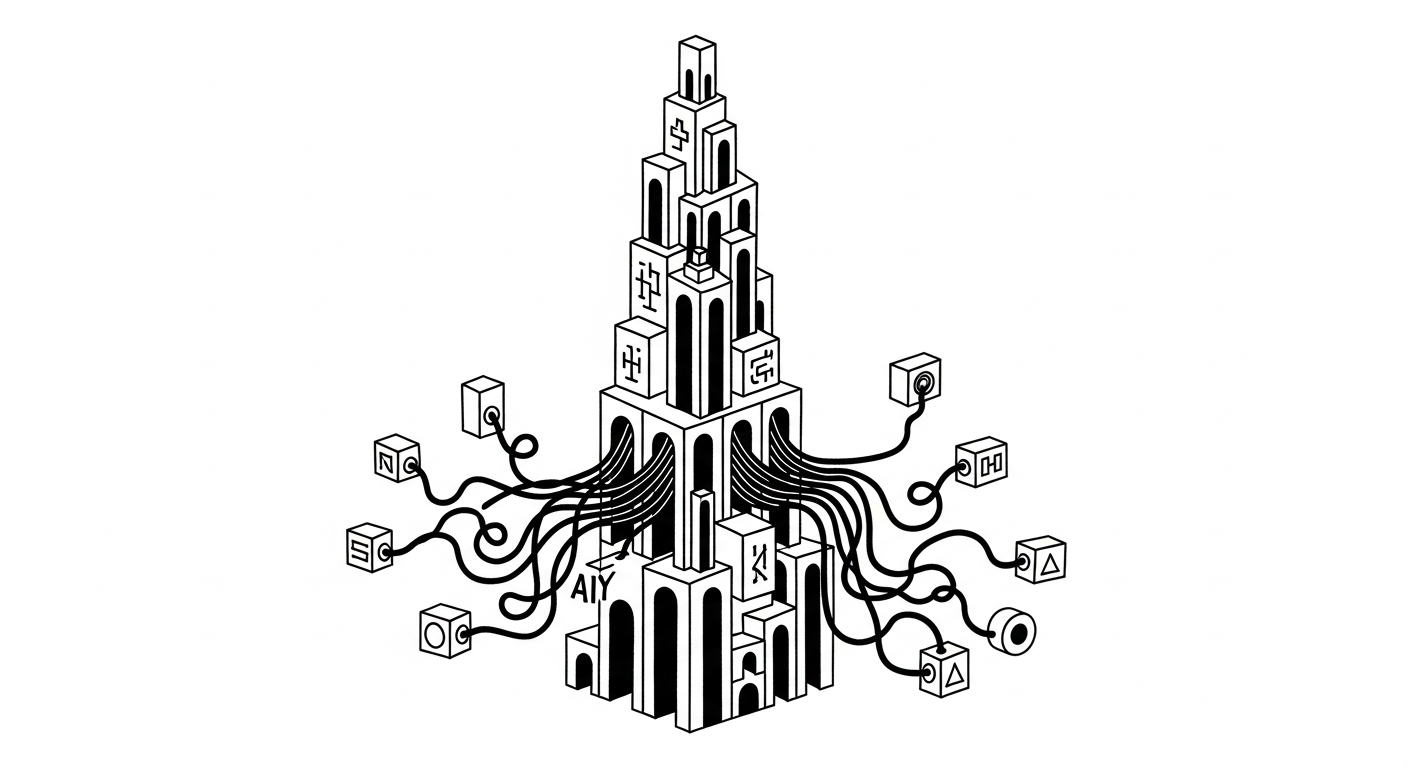
The core of the application is an orchestration layer. This layer manages the handoffs between different specialized services. One service handles the narrative arc, another manages character consistency, and a third generates the visual assets. By decoupling these concerns, I can swap out the underlying models as the technology evolves without rewriting the entire product.
We use a managed relational database to maintain state. In a storytelling context, state is everything. The system needs to remember that a character found a key in chapter one so that it can be used in chapter four. Without a robust state machine, AI-generated content quickly devolves into a series of disconnected events. Building an ai story app requires treating the narrative as a structured data object rather than just a string of text.
The Shift in Production Costs
In the old model, a product like Inky would have required a team of engineers, a product manager, and a dedicated QA resource. Today, I run it as a single operator. The work that used to be done by a team is now handled by a fleet of AI agents. These agents monitor the logs, flag inconsistencies in the generated stories, and even suggest optimizations for the orchestration layer.
This shift changes the stakes for founders. When the cost of production drops, the value moves to the edges: distribution, taste, and the ability to design the right system. I do not spend my time writing boilerplate code. I spend my time allocating capital and attention to the decisions the machine escalates to me. If the agentic workforce detects a pattern of failed image generations, it presents the data, and I make the call on how to adjust the prompt logic or the service provider.
Designing for Longevity
Total Ventures is built to keep. We do not build for an exit or a quick flip. This philosophy dictates how Inky is constructed. Every decision is a bet on long-term stability.
I learned the hard way that relying too heavily on a single model's specific quirks is a recipe for technical debt. Early in the build, I had logic that was too tightly coupled to the way one specific model formatted its output. When that model was updated, the story parser broke. I had to redesign the system to be model-agnostic, using a strict schema for all internal communication. It was a painful lesson in the importance of building defensive layers between your product and the third-party APIs it depends on.
Building an ai story app also means thinking about the financial margins from day one. Because every story generation incurs a variable cost, the unit economics must be baked into the architecture. The system is designed to optimize token usage and cache results where possible, ensuring that the product remains profitable as it scales. We track these numbers through a custom financial reconciliation layer that connects the application usage directly to the studio’s P&L.
The Operator's Frame
The reality of building an ai story app is that the technology is the easy part. The hard part is the discipline of operation. It is the daily work of checking the feedback loops, refining the agents, and ensuring the system is compounding in value.
I see code the way I see a musical progression—it has a syntax and a rhythm. A well-built system should feel like a resolved chord. It should do its job quietly and efficiently, leaving the operator free to think about the next move. Inky is not just a project; it is an asset. It is a piece of the machine that supports my family and allows me to stay present as a father to Jupiter.
If you are building an ai story app, or any digital product in this new era, focus on the system underneath the slogan. The tools will change, but the principles of sound engineering and owner-level discipline are what allow a one-person studio to out-ship a funded team.
Full implementation details and the logic behind our orchestration layer are available in the studio resources below.
Studio Notes
How I’m building the studio.
The operator’s log — systems, decisions, and what’s working.
Written by
Founder, Total Ventures
Solo-founder building a multi-brand product studio with AI agents. Writing about building, operating, and shipping.


