Most people think building an ai story app is about writing the perfect prompt. It isn't. It is about architecting a system that can handle state, context, and narrative logic without collapsing under its own weight.
I am currently building Inky, an AI-driven storytelling platform. I am not building it as a solo developer—I am running it through my studio with AI as the operating layer. This shift from writing code to architecting systems is the only way to ship at the speed the current market demands.
Here is what I have learned the hard way about building an ai story app that actually works.
The Shift to Agentic Engineering
When you start building an ai story app, the temptation is to create a massive prompt that describes the entire world, the characters, and the plot. You send it to an LLM and hope for the best. This fails the moment the story moves past the second chapter.
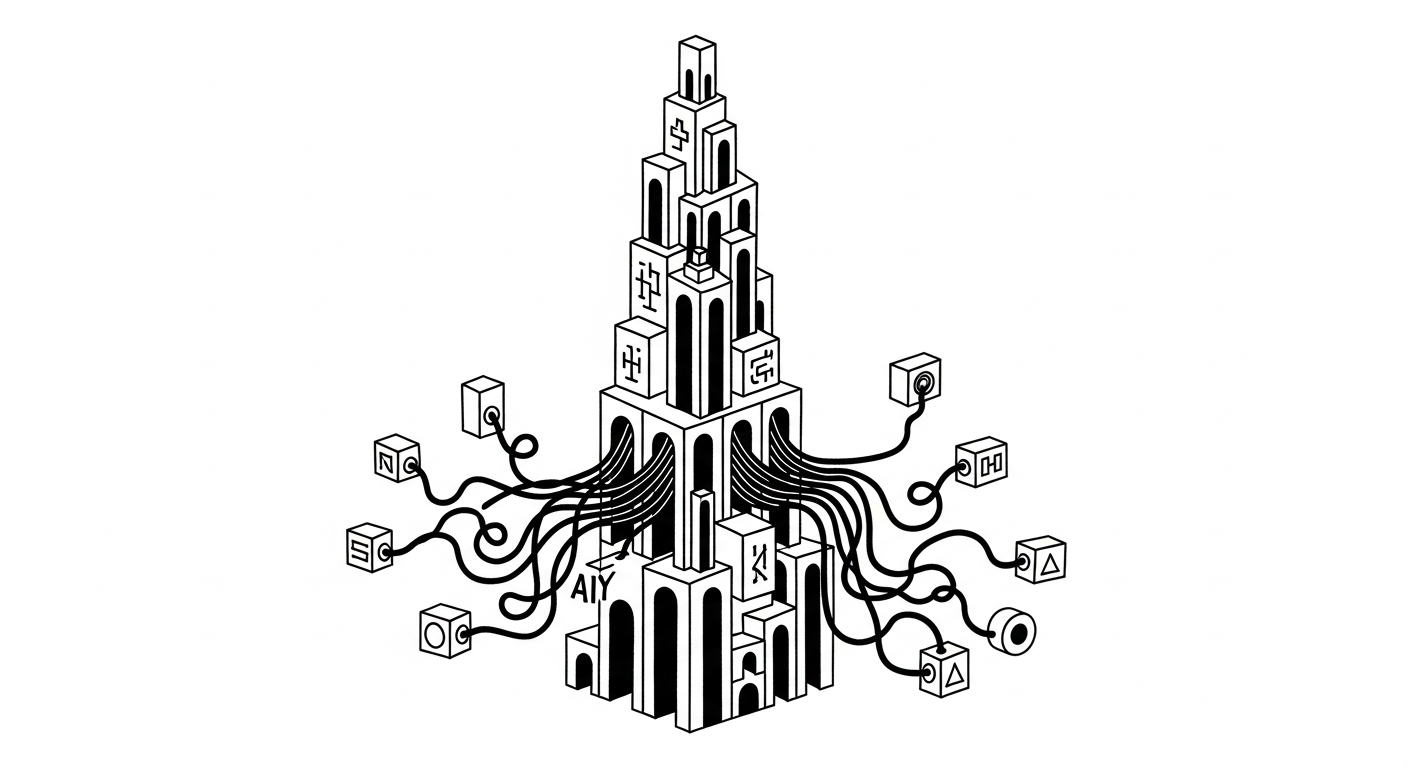
I moved away from single-prompt logic early on. Instead, I use agentic engineering. In the Inky architecture, the narrative is not generated by one call. It is managed by a series of specialized agents orchestrated by VERA, my custom internal layer.
One agent is responsible for the 'World Bible'—maintaining the facts about the setting. Another agent tracks character arcs and emotional states. A third agent, the 'Prose Architect,' actually writes the text. By decoupling the logic from the output, the system maintains consistency over 50,000 words. If you are building an ai story app today, you have to stop thinking about prompts and start thinking about feedback loops.
The Inky Stack: Architecture Over Hype
I don't choose tools because they are trending. I choose them because they allow me to ship today. The Inky stack is a monorepo designed for a solo operator running a multi-product studio.
- Frontend: Next.js. It is the industry standard for a reason. It handles the SEO requirements and the complex state of a writing interface without getting in the way.
- Backend: Firebase. I use Firebase for the real-time database and Cloud Functions for the heavy lifting. I migrated 14 callables last month to optimize cold starts, shaving 300ms off the narrative generation trigger.
- AI Layer: Claude API and Gemini. I use Claude for the creative prose because of its superior nuance and Gemini for long-context retrieval when the 'World Bible' gets too large for a standard context window.
- Orchestration: VERA. This is the glue. It handles the handoffs between agents and ensures that the character who died in chapter three doesn't suddenly reappear in chapter six.
This isn't about being an expert in one specific framework. It is about picking the right instrument for the system.
Lessons Learned the Hard Way
Building an ai story app taught me that latency is the silent killer of user experience. When a user clicks 'Generate Next Chapter,' they are willing to wait ten seconds, but they aren't willing to wait forty.
I learned the hard way that streaming is not optional. If you don't stream the response, the user assumes the app is broken. Implementing a robust streaming architecture with Server-Sent Events (SSE) was a three-day pivot that should have been a day-one decision.
Another lesson: context window management is a financial decision, not just a technical one. If you send the entire story history with every request, your API costs will scale exponentially while your margins shrink. I implemented a vector-based retrieval system (RAG) to only pull the relevant 'memories' for the current scene. This reduced my token usage by 60% without sacrificing narrative quality.
Working in Public: The Studio Model
I am not just building a product; I am refining an operating system. In my studio, the goal is profit before revenue and craft before scale. Inky is a test case for how a small, well-run team—mostly comprised of AI agents—can produce a high-fidelity digital product.
I am working in public because the artifacts matter more than the slogans. When I show a terminal screenshot of VERA handling a narrative conflict, it is because that system is shipping today. It isn't a theory.
The Reality of Shipping AI in 2025
If you are waiting for the 'perfect' model to start building an ai story app, you are already behind. The models will change. The underlying architecture—how you handle state, how you manage agents, and how you serve the user—is what creates durable value.
I am an architect of systems, not an author of one stack. The medium for Inky is software, but the work is the system underneath. It is about building something durable that supports the life I want to lead—one where I can be present for my family while the studio continues to ship.
If you are building something similar or want to look at the system architecture I am using, I am happy to talk.
Next Step
Review your current project's state management. If you are relying on a single prompt to do the heavy lifting, break it into three specialized agents this week. Observe the difference in output quality and consistency.
Full implementation details for this agentic approach are in The Builder's Playbook — totalventures.io/resources/builders-playbook
Studio Notes
How I’m building the studio.
The operator’s log — systems, decisions, and what’s working.
Written by
Founder, Total Ventures
Solo-founder building a multi-brand product studio with AI agents. Writing about building, operating, and shipping.


