I am shipping Inky today. It is not a demo or a proof of concept. It is a functional digital product designed to solve a specific problem: the friction between human imagination and the blank page.
When you are building an ai story app, the temptation is to treat the LLM as a magic box. You send a prompt, you get a story, and you call it a product. That approach is brittle. It does not scale, and it does not produce a durable user experience. Inky is built differently. It is the result of architecting a system where AI is the operating layer, not just an autocomplete feature.
The Artifact: Beyond the Wrapper
Inky is a storytelling engine. The goal was to create a system that could maintain narrative consistency across long-form arcs while allowing for granular user intervention. Most people building an ai story app stop at the single-prompt generation. They hit the context window limit or the narrative drifts into nonsense by chapter three.
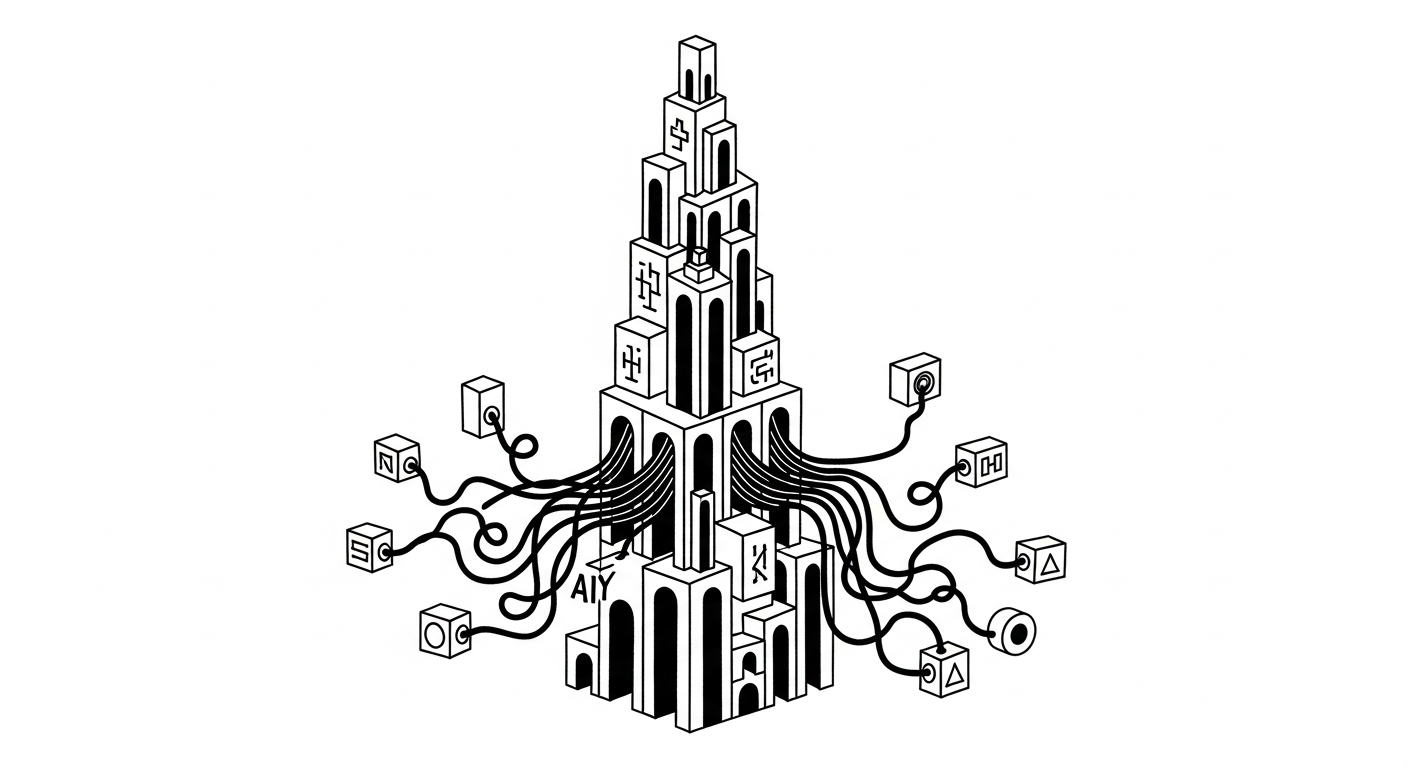
I learned the hard way that a single LLM call cannot handle a 50,000-word plot. The system requires a state machine. In Inky, the architecture separates the 'World Brain' from the 'Drafting Engine.' The World Brain is a structured database—a set of JSON schemas—that tracks character traits, locations, and plot points. The Drafting Engine is the agentic layer that pulls from that state to write the prose.
This separation of concerns is what makes the app functional. If a character loses an arm in chapter two, the World Brain updates that state. When the Drafting Engine writes chapter ten, it queries the state first. This is not 'magic'; it is basic systems engineering applied to generative models.
Agentic Engineering as the Team
I run a multi-product studio where AI is the team. For Inky, this meant moving beyond simple API calls and into agentic engineering. I built a custom orchestration layer called VERA to handle the heavy lifting.
In this model, I am the architect, and the agents are the specialists. One agent is responsible for narrative pacing. Another handles dialogue consistency. A third monitors the infrastructure for latency spikes. They operate within a monorepo, sharing types and schemas, which allows me to maintain a high shipping velocity without a headcount of twenty developers.
Working in public means being honest about the stack. I am not an advocate for one specific framework. I use what works. For Inky, that means a TypeScript-heavy monorepo, a robust PostgreSQL backend for state persistence, and a mix of Claude and Gemini models depending on the task. Claude handles the creative prose; Gemini handles the long-context retrieval for the World Brain. The system is the priority, not the brand of the model.
What Broke: Lessons Learned the Hard Way
Building an ai story app in 2024 is a series of trade-offs. Early in the development of Inky, I tried to automate the entire narrative arc in one pass. It failed. The output was generic, the pacing was rushed, and the cost per story was unsustainable.
I had to re-engineer the feedback loops. I learned that the user needs to be the 'Editor-in-Chief.' The AI handles the labor of drafting, but the human provides the directional intent. By breaking the generation into 'beats'—small, manageable chunks of narrative—I reduced token waste and improved quality.
Latency was another hurdle. Users do not want to wait three minutes for a chapter to generate. I implemented a streaming architecture that allows the user to see the story as it is being 'thought' by the agent. It is a technical solution to a psychological problem: perceived wait time.
The Monorepo and Solo Operations
I build small, well-run, and durable. Inky is part of a larger ecosystem of products I am running through my studio. By using a monorepo, I can share the VERA orchestration layer across different apps. The same agentic logic that handles story beats in Inky can be adapted to handle research tasks in another product.
This is how you scale as a solo operator. You do not hire more people; you build better systems. You treat your code as an asset that should compound over time. Every utility function, every agent prompt, and every database schema is a brick in a larger infrastructure.
Profit comes before revenue. I am not interested in vanity metrics or 'disrupting' the publishing industry. I am interested in building a tool that people pay for because it provides clear value. Inky is priced to be sustainable, not to capture a market through subsidized growth.
Shipping Today
The work is never finished, but it is ready to be used. Building an ai story app has taught me more about state management and agent orchestration than any tutorial ever could. The lessons are in the commits.
If you are building in this space, stop looking for the perfect prompt. Start building the system that manages the prompts. Focus on the data structure, the feedback loops, and the user’s ability to steer the machine.
I am happy to talk about the specifics of the Inky architecture or how I am using VERA to run the studio. The goal is to keep shipping, keep learning, and keep the systems lean.
Full implementation details and the architectural patterns I used for Inky are available in the Builder's Playbook.
Full implementation in The Builder's Playbook — totalventures.io/resources/builders-playbook
Studio Notes
How I’m building the studio.
The operator’s log — systems, decisions, and what’s working.
Written by
Founder, Total Ventures
Solo-founder building a multi-brand product studio with AI agents. Writing about building, operating, and shipping.


